Animals lead interesting and diverse lives, adapting their routines to fit their environments. In the wild, creatures have unique daily habits based on their needs for food, shelter, and mating. Many animals hunt or forage to gather nourishment.For instance, lions in Africa often hunt in groups to increase their chances of catching prey. Meanwhile, a solitary wolf might roam for miles to find its next meal. volume_up
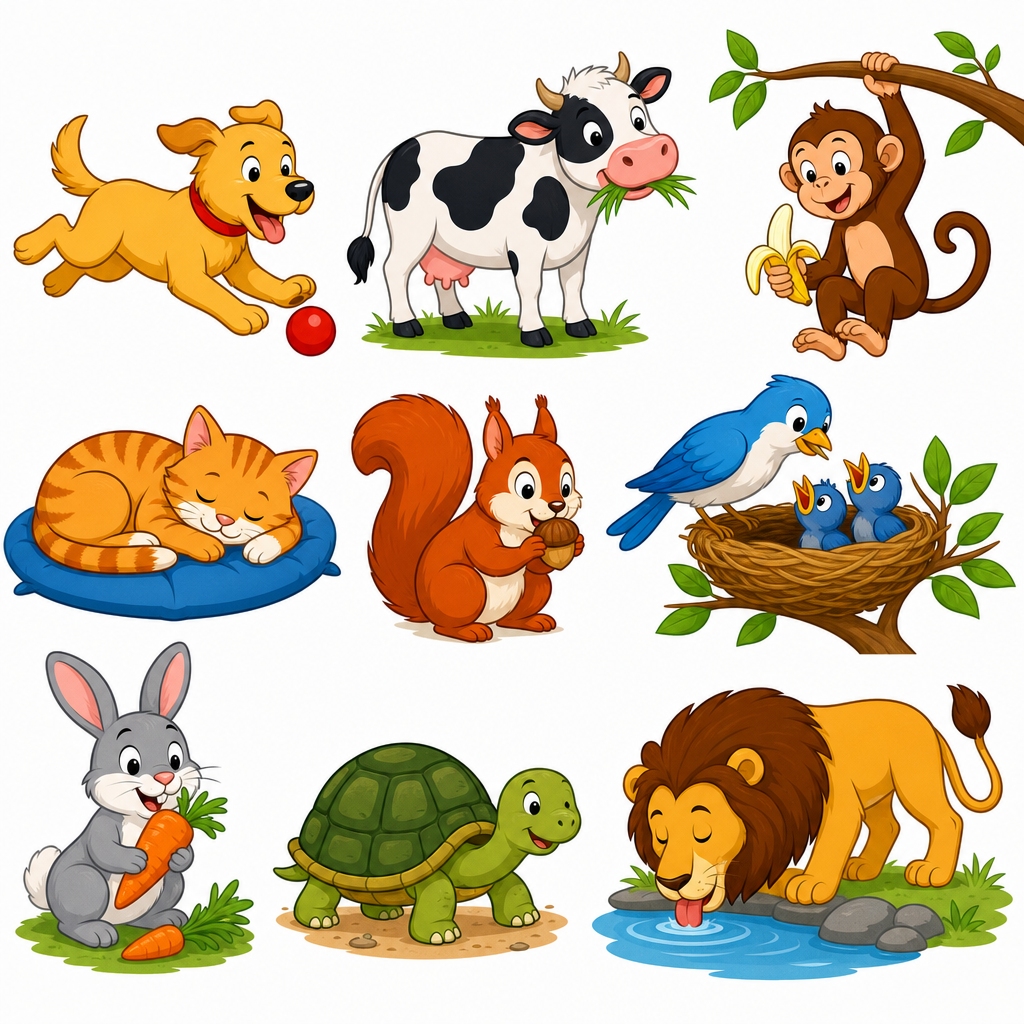
In addition to hunting and foraging, animals also focus on protecting themselves and their territory. Birds, for example, often build nests in high trees to safeguard their eggs from predators. Similarly, some mammals, such as meerkats, have developed sophisticated communication systems to alert each other of danger.These behaviors highlight the importance of community and protection in the animal kingdom. volume_up
Finally, animals spend time nurturing their young ones. Kangaroos have pouches to carry their babies until they are mature enough to survive alone. Penguins, on the other hand, keep their chicks warm by tucking them under their legs. volume_up These nurturing behaviors ensure the survival of the species and showcase the remarkable adaptability of nature.